> Views of Altea Podcast 01 - Introduction to Altea
In the first episode of Views of Altea, learn about the town of Altea and the landscape.
VIEWS OF ALTEA #01 TRANSCRIPT
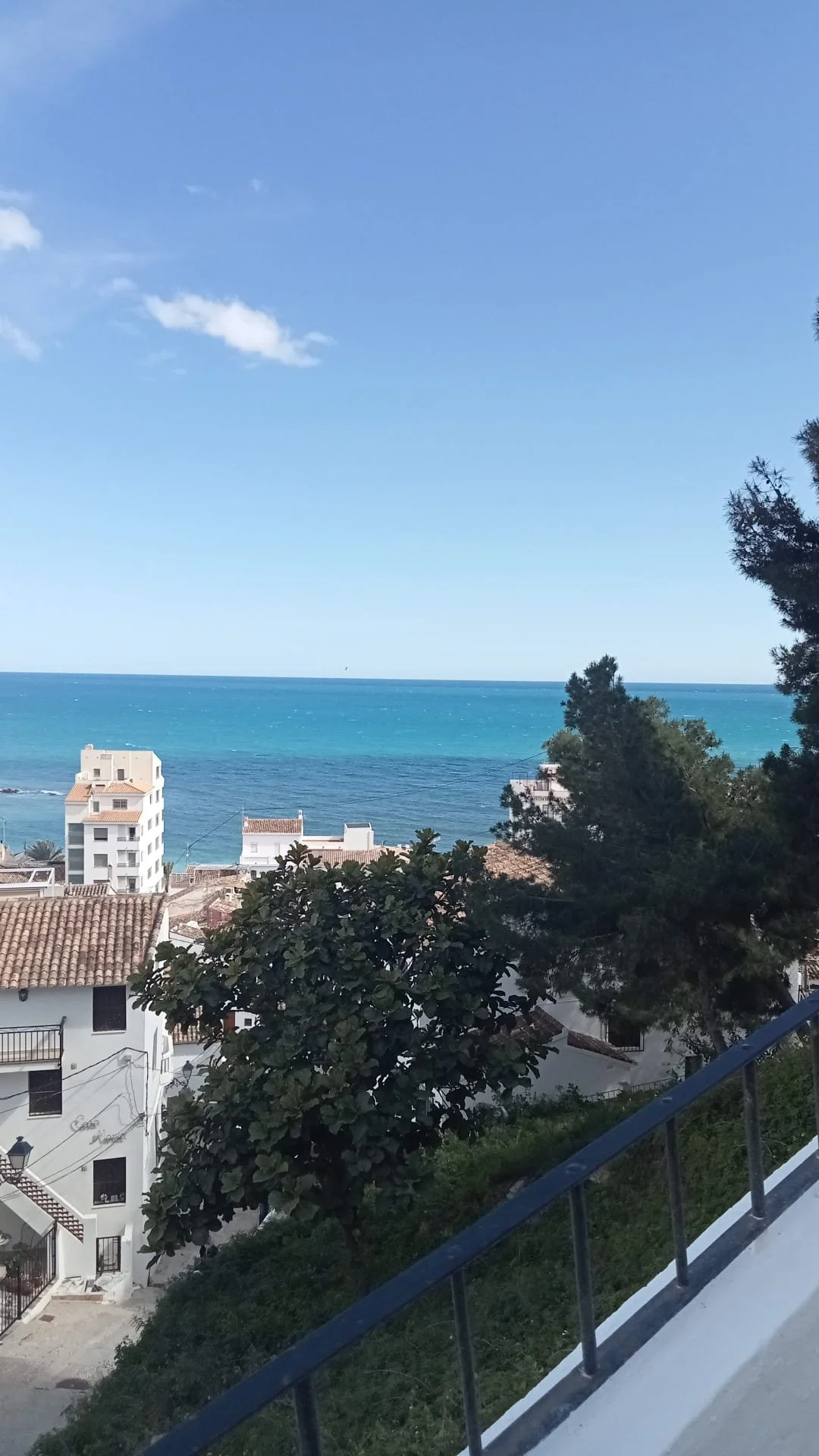
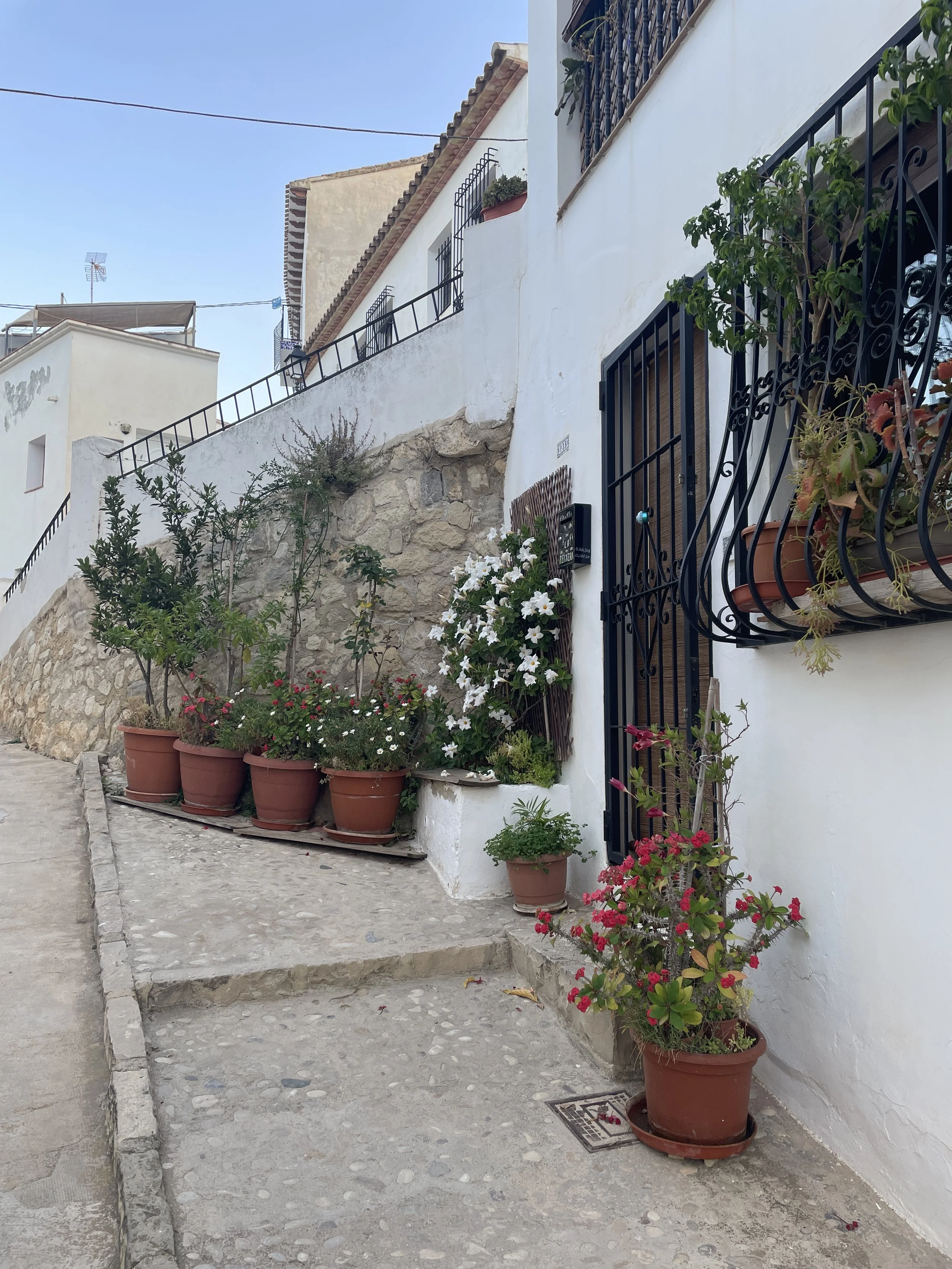
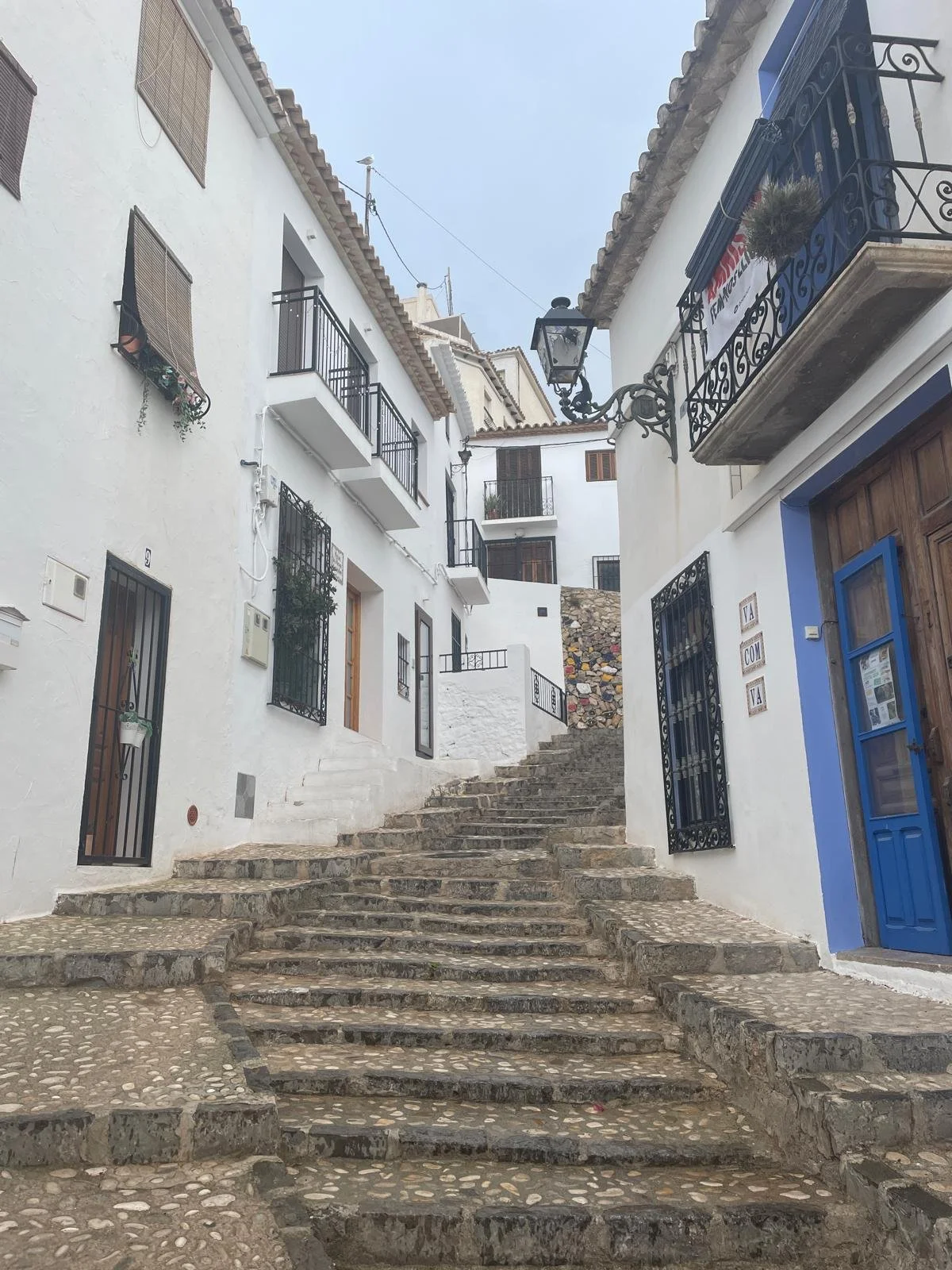
This is Altea, a small Spanish town facing the Mediterranean, with whitewashed homes cascading down a hillside to the stone beach below. At the top, there is a church with tiles of blue on its roof, a bell tower, and a central plaza filled with people.
Welcome to Views of Altea. I’m Mercedes Carrabba.
Altea is a town of sudden views. You turn a corner and the sea appears between two houses. You look up from a cafe table and notice a flock of brightly colored pigeons practicing their runs. You climb a staircase one you have climbed a hundred times, but today, because of the light or the air, the whole town seems to have rearranged itself.
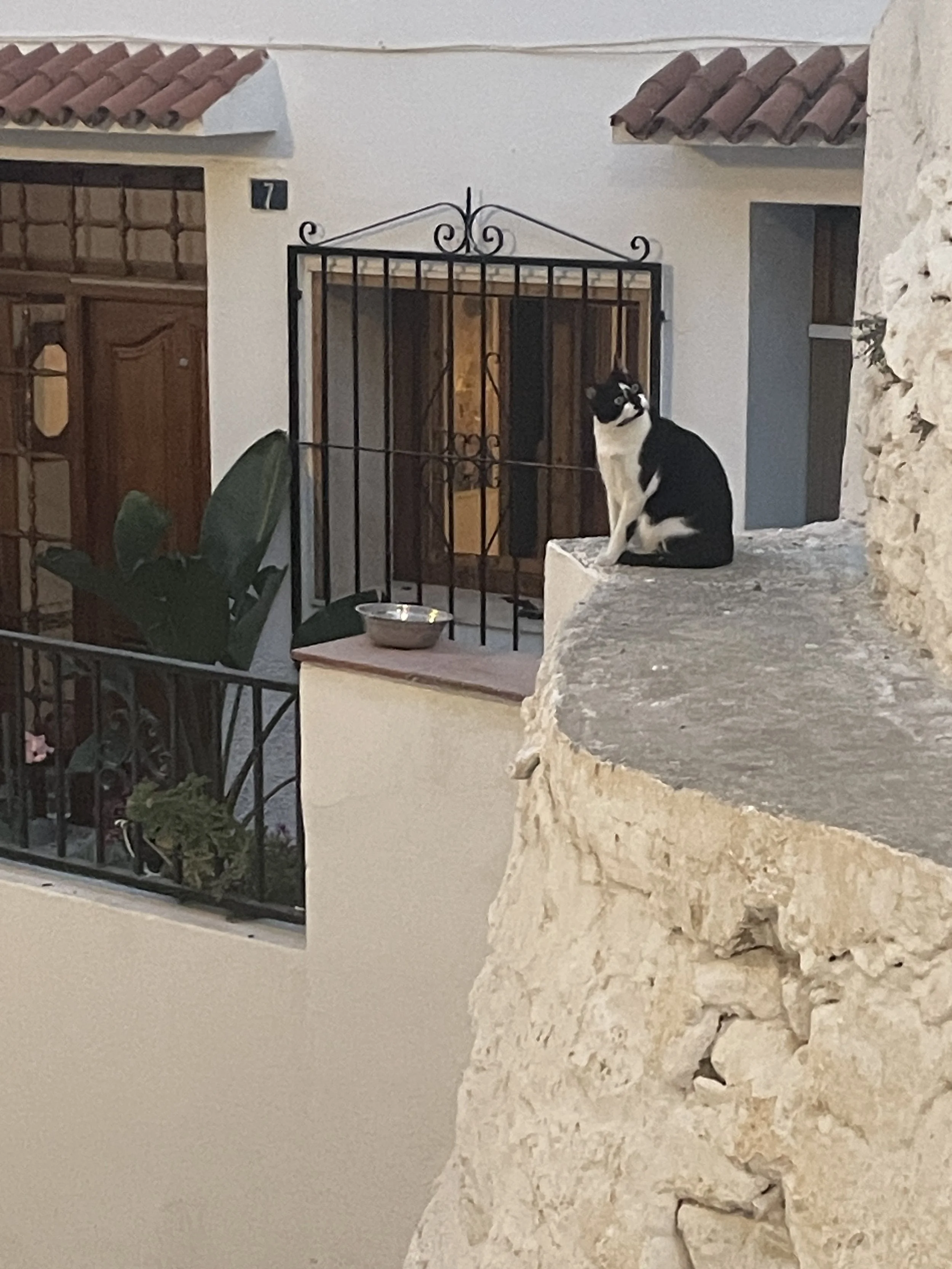
There is the Altea people photograph, people visit and the Altea people live and work in. And then there is the place that exists but a few moments: the beach before sunrise, the town in a chaotic winter storm, the streets after the last summer visitors have left, when the locals decorate them for festivals, the mornings when the dogs bark from balconies, and the season when the oranges are ripe.
Those are the moments of Altea we will explore together.
Altea is on Spain’s southeastern Mediterranean coast, in the province of Alicante, in the Valencian Community. This part of the coast is known as the Costa Blanca. It’s between Benidorm to the south and Calpe to the north.
While it is a small town, it has distinct neighborhoods, each with their own character. You understand Altea differently depending upon which direction you approach it.
The beach is a sprawling promenade, walk up from the sea and you find an ancient town, a labyrinth of small streets. Go through the center of town and it is a thriving place of commerce. Come from behind and you encounter a University and a large Symphony Hall. Try to drive through the old town, the casco antiguo, without knowing where you are going and it looks like a terrible personal decision.
Behind the town is the Sierra de Bernia, a long limestone ridge that affects the light, the weather, and the feeling of living here. When you are standing at the sea, you are never simply on an open coast. You are held between the water and the limestone. Just to the south is where the Algar River meets the Mediterranean. For much of the year, it’s a wide, green, earthy corridor. But in the early summer it fills with water and fragrant flowering plants attracting wild boars from the hills around Altea.
Then there is the Mediterranean itself. The color of the sea changes from silver to turquoise to a dense, impossible blue, depending on the wind and season. When the sea is calm, the town feels serene, almost like taking a deep inhale. The air and the water so still.
And then, when the wind churns and the storms come, the waves crash into the beach, turning the stones, devouring the manicured swimming spots, and crashing onto the promenade.
Altea reveals itself in layers. Artists have been drawn here for generations—painters, musicians and writers.
My own parents were painters here in the 1970s, with a studio on Calle Alba. I was born here, and my earliest memories are of an impoverished town under Franco: dirt streets, donkeys and goats; a beach for fishing; ancient houses crumbling in parts of the town. I remember the aroma of carob in the streets, the lemon and almond groves that are now gone, and my mother washing clothes in the river. We left for the United States in 1979, not long after Spain adopted its new Constitution. What I remember from childhood is a place that has largely disappeared in modern Spain. But that connection has made me more keenly aware of Altea as it is today: its small changes, its easily missed details, the smells, and those moments when history shows through. If you visit for a day, or even a week, you may leave remembering the church, the sea, the streets, but live here and you discover the rhythms, the views, the people. It becomes something your body knows. Something my body remembers.
So, what is Views of Altea? What will this podcast be? After these first introductory episodes, each program will begin with the description of a view. Sometimes it will be one of Altea’s recognised viewpoints: a mirador, the church plaza or the beach. But it might also be the corner where two streets meet or a bench beside the river. We will talk about what is happening in Altea. And each episode will include history, because a town begins to acquire depth when you understand the forces that shape it.
Each episode will also include a personal story. Sometimes it will be mine, and sometimes, I hope, it will belong to someone else. I’m not claiming to know the definitive Altea. I don’t believe there is one.
This podcast is a practice in intention. It is about noticing how history remains inside ordinary life, how a town changes, and how those changes are mirrored in the people who live here — including me. The title Views of Altea refers to the physical views, of course. The town is wonderfully generous with those. But it also means points of view. Because Altea, Spain is never just one view. It changes depending on where, when, and who is viewing it.